


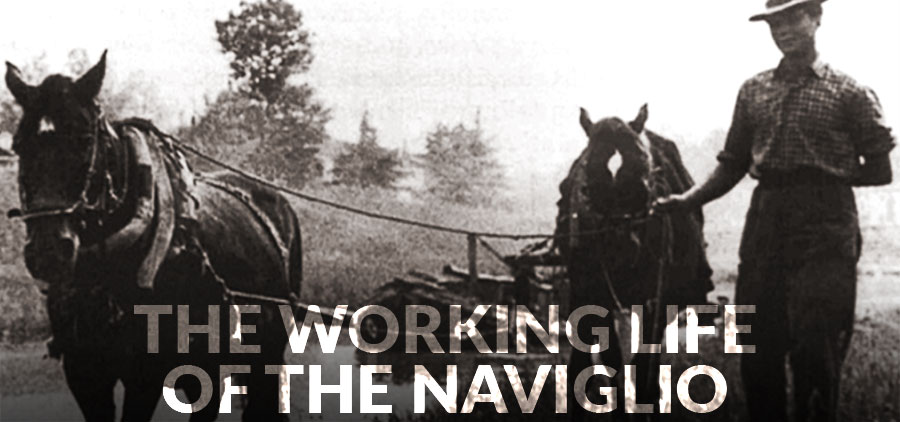
Stories of water, work and community
The construction of the Naviglio Martesana played a crucial role in the economic and social development of the region, thanks to pioneering technical solutions. Along its route, four navigation locks were built — an unprecedented innovation at the time — showcasing the ingenuity of the Milanese and Lombard schools of hydraulic engineering.
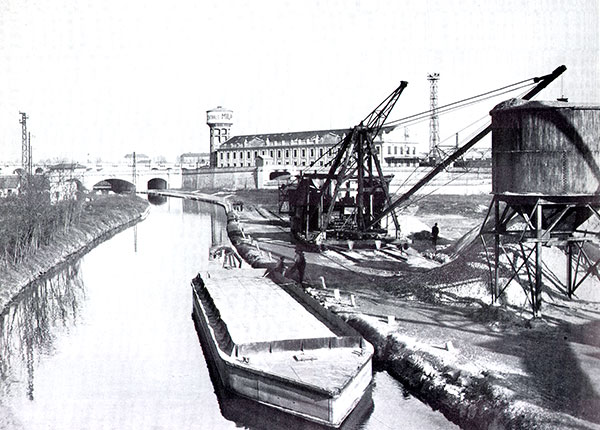
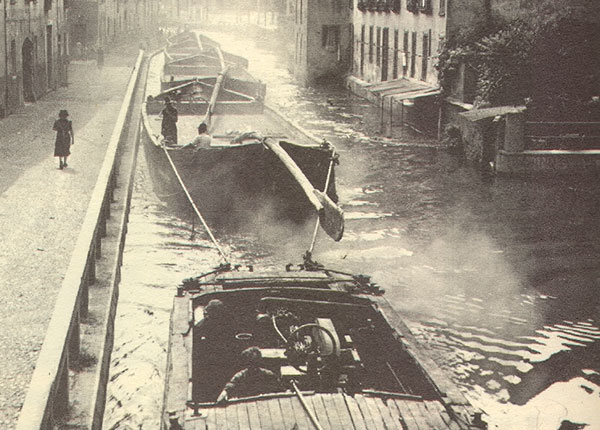
These locks not only made navigation possible by overcoming differences in water levels upstream and downstream, but also helped shape a unique landscape — a true working ecosystem — marked by crafts linked to water and commercial navigation: from boatmen to “campari” (traditional canal keepers who maintained locks and waterways), and from farmers to millers. This vibrant system left behind a cultural and architectural legacy that can still be seen today along the banks of the Naviglio.
Discover 360° content

Click and explore
Push and explore

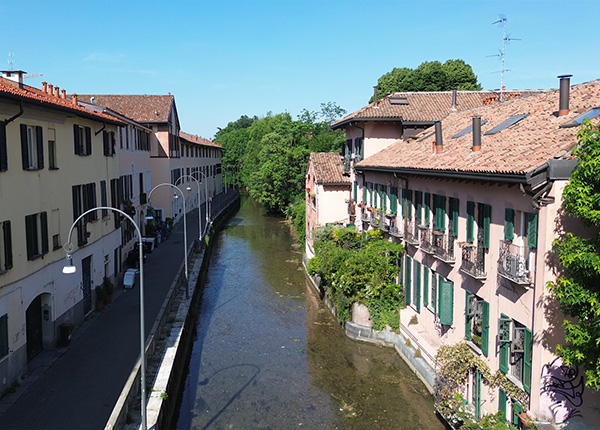
THE COASTAL VILLAGE
Greco Milanese
Via Tofane, one of the most iconic streets in Greco, offers an authentic glimpse into what was once a riverside village. You can still feel the atmosphere of a time when people shaped their living and working spaces along the water’s edge.

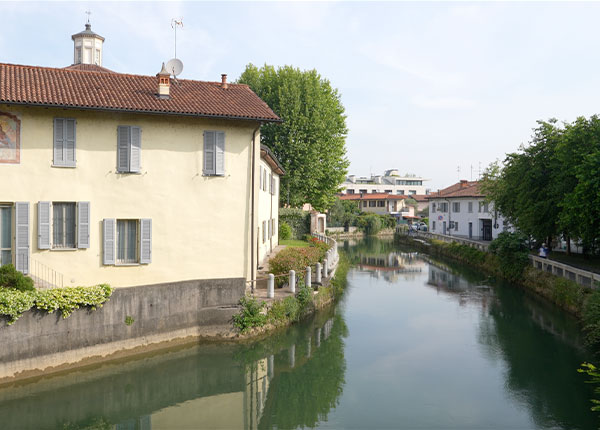
Naviglio Bend
Gorgonzola
In this stretch, the canal forms a small bend, where boats used to slow down as they approached the town of Gorgonzola. A fresco of the Virgin Mary on the outer wall of the Parish House accompanied the boatmen on their journey.
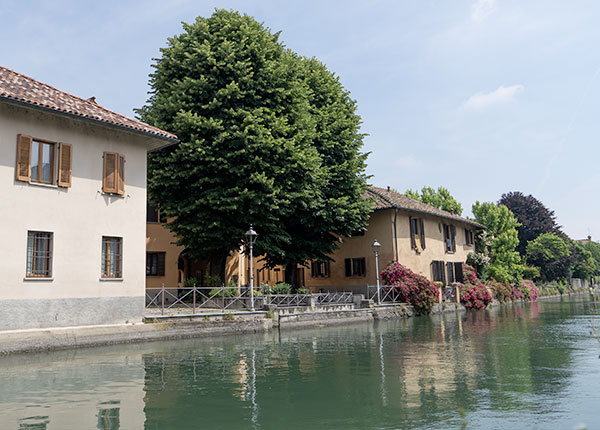
The “Sciustra”
Inzago
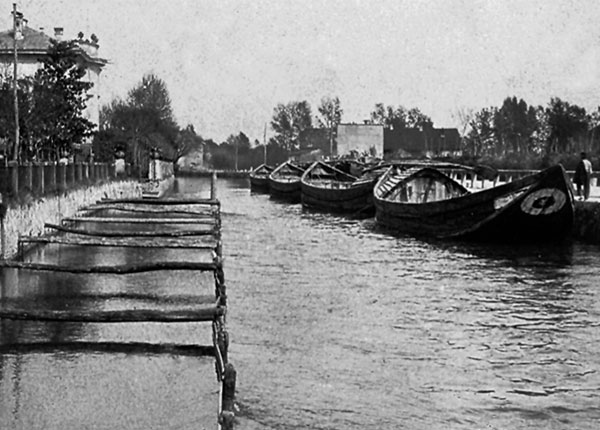
One of the many small ports and docks that once lined the banks of the Martesana — essential hubs for the economy of the time. These “Sciostre”, like the historic one in Inzago, were true nerve centres for loading and unloading goods and agricultural products. As such, they played a key role in trade and in the daily life of local communities.
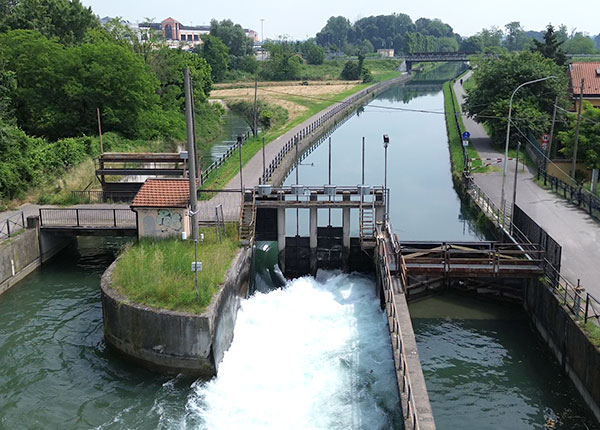
Villa Fornaci Lock
Bellinzago Lombardo
The Villa Fornaci Lock is a Leonardo-style lock (“conca vinciana”), measuring 33 meters in length, which compensates for the 1.83-meter difference in water levels between upstream and downstream. The lock was not invented by Leonardo da Vinci, but he introduced significant technical improvements to its design — hence the term “Leonardo-style lock”.
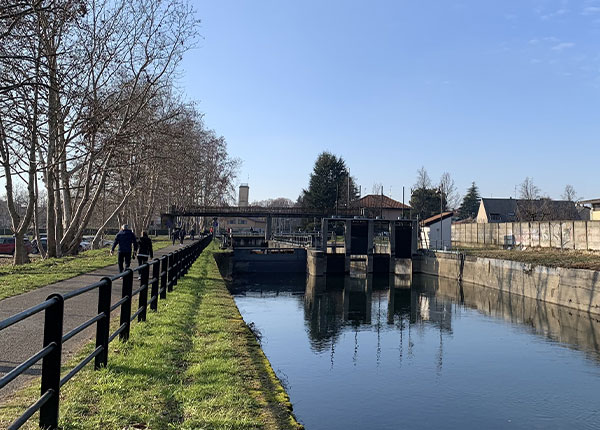
Inzago Lock
Inzago
The Naviglio Martesana was among the first canals to be equipped with locks, in addition to the intake point at Concesa. The Inzago lock, like all the others, follows the same design principles as the Leonardo-style lock. The operating principle is identical — the only difference lies in the driving force, which, in this case, is electric.